For this analysis, I have looked at specific movies and other entertainment platforms to get an idea of what my characters would be like.
FOR JOE:
Because he is the comedy centre of the movie and has a fourth wall breaking style, I looked at popular comedies that all ages enjoy to get an idea of the comedy style and Joe's character. For this, I looked at these movies that have that 4th wall style:
Wayne's World
Spaceballs
Deadpool
Scott Pilgrim vs the world
From all of these movies I found the style I was going to use. I knew my character couldn't be as raunchy as Deadpool, I needed the character to be more verbally appropriate so young teenagers could watch my movie as well. From Wayne's World and Scott Pilgrim specifically I found two characters who I though were great stepping stones for my character. Garth Algar (Wayne's World) and Scott Pilgrim (Scott Pilgrim) are both very socially awkward, have weird behaviour, messy hair and were the kind of character my "outcast" audience could relate to.
FOR SIMON/JOSH:
Because both of these are parodies of the internet and the people who use it, I decided I would explore the internet some more. I joined many meme sights and researched many current memes at the time in order to get a feeling of what the kind of people who love memes look and behave like. I knew my characters would need to wear dorky clothes and glasses as the stereotypical nerd wears that, and most of the people I met via exploring memes were typical nerds, they weren't very social either.
FOR ERIN/GRETCHEN:
Because she is the "I hate everything" kind of person, I watched a couple of teen shows and films, but also a couple of the goth/horror movies that she'd most likely watched. the main movies I watched were:
Beetlejuice
The addams family
Glee
Mean girls
From these movies and shows, I gathered the kind of characters she would be like. Lydia from Beetlejuice, Morticia and Wednesday from The Addams family, Tina from Glee and Janis Ian from Mean girls. they all wear black, had a mysterious ego to them and most of them had a very bad attitude. these were all essential to my characters of Erin and Gretchen.
FOR EUGENE:
Because I wanted him to be that of a typical antagonist, and (because of personal viewership) I knew that many high school horror films usually have a bully as a primary antagonist outside of the possible supernatural monster, I watched some high school horrors such as:
Carrie
IT
Let me in
From these I knew my character needed a weakness, something that made him insecure and that's why he bullied. EG: Kenny (Let me in) was bullied by his older brother and wanted to look tough in front of him. With Eugene, he hates his own name and he bullies to compensate.
FOR EVANGELINE:
I wanted her to be the typical popular/beautiful girl, who really couldn't care less about our protagonist. For this, I looked at typical teen comedy films like:
Scott Pilgrim vs the world
Mean girls
From Mean girls I knew she'd have to be the most beautiful girl in the school, preferably blonde and that she'd have a blunt attitude where she ignores and blanks the main character, like how Ramona (Scott Pilgrim) flees or blanks Scott to keep this fearless persona up or to avoid a problem.
Monday, 27 February 2017

Saturday, 18 February 2017
film production logo analysis
WARPFILMS:
This logo has a very sharp lightning-esk shape in which the title lies, which could connote that the company is edgy, sharp or takes risks. The globe-like background connotes global viewership. anyone anywhere can see their films. Black and white colour scheme also adds to the connotation of sharp/edgy-ness. It's also very simple which could suggest it is an independent company that does things on the cheap.

WORKING TITLE:
This logo is very simple. The title itself is in a san serif font, which means it is easy to read, no mistake, it is working title. It also connotes simplicity, it is an independent company and nothing too grandiose. The circle in the middle could once again connote the idea of seeing, an iris or a pupil. This is to connote the idea that it is a visual media, you are there to see a movie, nothing more. The fact that the font is very bold and not small or hard to read means you will remember it more, this is good for the company if they want their product to sell.

DREAMWORKS:
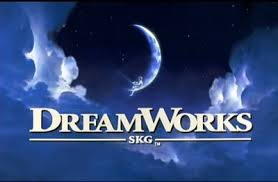
The setting of being in the clouds adds connotation to the title dreamworks. In tern the boy could very well be us. If this is true then the logo could connote the idea that the movies will take us to another world and give us a movie experience like no other. The colour of white in the child could very well connote innocence. The font is serif, this makes it seem smart and charismatic as it is one of the major film industries. This will attract audiences as they now know it is a top quality company and therefore so should the movies. The dark purple/blue background will allow the main title and image to stand out, which is good because people will be able to recognise what it is more.
UNIVERSAL:
The global aspect in the main image connotes the idea that it is a global company and that it is everywhere. This is also made more clear by the name itself, "universal". The serif font also makes it look more professional, which you should expect from a company that boasts global power. The shiny font also helps the name stand out. This massive presence will impress the audience and get them to not only remember them more, but to see their products as it seems like it's the best based off it's atmosphere. The black background makes a stark contrast between the planet and logo, which, once again, allows for the name and image to stand out.

TAKE TWO PRODUCTIONS:
The fact that this title is tilted could connote the idea that they are edgy, or that they're not professional, they are independent. The two theme in the title also works in to the image, with two t's joined together in the pattern of actual film. This connotes their production selling point, movies. the black and white template also connotes it's simplicity as well as fitting the stereotypical image of a film reel. The san serif all capitals font also adds to it's simplicity; it also makes the name of the company stand out more.

This logo has a very sharp lightning-esk shape in which the title lies, which could connote that the company is edgy, sharp or takes risks. The globe-like background connotes global viewership. anyone anywhere can see their films. Black and white colour scheme also adds to the connotation of sharp/edgy-ness. It's also very simple which could suggest it is an independent company that does things on the cheap.
WORKING TITLE:
This logo is very simple. The title itself is in a san serif font, which means it is easy to read, no mistake, it is working title. It also connotes simplicity, it is an independent company and nothing too grandiose. The circle in the middle could once again connote the idea of seeing, an iris or a pupil. This is to connote the idea that it is a visual media, you are there to see a movie, nothing more. The fact that the font is very bold and not small or hard to read means you will remember it more, this is good for the company if they want their product to sell.
DREAMWORKS:
The setting of being in the clouds adds connotation to the title dreamworks. In tern the boy could very well be us. If this is true then the logo could connote the idea that the movies will take us to another world and give us a movie experience like no other. The colour of white in the child could very well connote innocence. The font is serif, this makes it seem smart and charismatic as it is one of the major film industries. This will attract audiences as they now know it is a top quality company and therefore so should the movies. The dark purple/blue background will allow the main title and image to stand out, which is good because people will be able to recognise what it is more.
UNIVERSAL:
The global aspect in the main image connotes the idea that it is a global company and that it is everywhere. This is also made more clear by the name itself, "universal". The serif font also makes it look more professional, which you should expect from a company that boasts global power. The shiny font also helps the name stand out. This massive presence will impress the audience and get them to not only remember them more, but to see their products as it seems like it's the best based off it's atmosphere. The black background makes a stark contrast between the planet and logo, which, once again, allows for the name and image to stand out.
TAKE TWO PRODUCTIONS:
The fact that this title is tilted could connote the idea that they are edgy, or that they're not professional, they are independent. The two theme in the title also works in to the image, with two t's joined together in the pattern of actual film. This connotes their production selling point, movies. the black and white template also connotes it's simplicity as well as fitting the stereotypical image of a film reel. The san serif all capitals font also adds to it's simplicity; it also makes the name of the company stand out more.
Friday, 10 February 2017
EVALUATION 1: IN WHAT WAYS DOES YOUR MEDIA PRODUCT USE, DEVELOP AND CHALLENGE FORMS AND CONVENTIONS OF REAL MEDIA PRODUCTS? (I.E. OF FILM OPENINGS)

The font looks like spray paint or graffiti of some kind. This appeals to the teenage demographic. The font colours are black and white, which is especially appealing to the edgy/angsty teenage demographic. The camera was hand held and suggested by the movement of the camera in perfect comedic timing and no cuts (that scene just being a continuous shot), that the cameraman is a character in itself. This isn’t conventional of teen angst comedy films, but makes the comedy and film in general unique. The story is unconventional for the start, usually these movies just start, but my film opens up with the characters not ready to film. This is a great way to set up the mood and style of the movie without getting the story muddled up. The story can be explained in the next take.
FRAME 2:
The medium right close up displays Joe as a tired/lethargic character, which teenagers can relate to as teenagers are naturally tired all the time. the mise-en-scene backs it up with the setting of a messy bedroom. the dim lighting connotes his tiredness also. the only stand out unusual thing is that the bed covers are girly, which connotes how much of a weird character he is and implies a lot about his character. the music playing is very angry techno/rock music, which is music some angsty teenagers listen to. there is a narration in this scene, who is played by the same character, this allows for a great symbolism of talking to yourself. this can really connect with the audience who may or may not have a lot of friends. his pyjamas are iron man pyjamas, which implies that he is a nerd.
FRAME 3:
The long shot displays a very average location, nothing special. this helps with connecting to the audience, as most of the audience won't be living in fancy dream like houses, most of them will have very ordinary homes. this location makes them feel like they could very well exist in the realm of the story. the clothing he wears are not conventional. they would be considered uncool in a typical teenage environment. this makes our character stand out and again signifies he is not the normal teenager. he is also talking directly to the narrator, who happens to be himself. this not only once again plays on the talking to yourself metaphor but also allows for a lot of 4th wall breaking humour, which is definitely the USP of the movie.
FRAME 4:
The low angle shot can connote many things. it can connote how big he looks to himself, which plays in with the monologue of having a few friends when really he only has one friend. this juxtaposition of narration/mise-en-scene against font adds humour and relatablility to the audience. the font is once again the typical graffiti look and again has personality. this is unconventional but is still funny and makes the movie more unique.
FRAME 5:
Simon is another character who is uncool, but he is supposed to be just a little bit cooler than Joe. to do this, I gave him little lines as teenagers think that people who talk less are more cool and mysterious. he quotes a meme directly to the audience, this will still imply that he is not very cool and help attract the internet nerd demographic to watch. the font goes in time with the character which allows for more humour in terms of comedic timing. his clothes are a lot more cool than Joe but his glasses signify that he is a geek, because glasses are a stereotypical trope within nerds.
FRAME 6:
The mise-en-scene in this scene is one entire punchline, this allows for more comedy as not only is there 4th wall breaking, there are cut away jokes, but it is the only one. if I had used more it would have become tedious and boring. and once again, the character on the screen is arguing with the narrator and the font.
FRAME 7:
The low angle shot signifies the bully's power and intimidation as he looks aggressive and stomps down the stairs. this sets up an antagonist. however, the name of the bully is unconventional. the narrator says his name is Eugene, which is not a typical name for a bully, but more a name someone would get bullied for. so this implies that he is a bully because he is embarrassed of his own name. this makes him more genuine and human while still making him the villain.
FRAME 8:
This frame uses the 180 rule to show how Joe and Evangeline are completely different. one is so tall (so tall his face is barely in the frame) and the other is smaller. one is ugly and wearing ridiculous clothes, the other is wearing casual clothes and is incredibly beautiful. one is crazy over the other, while the other couldn't care less. this allows the audience to be told everything about these two and their relationship (or lack there of) without saying a single word of dialogue. completely show don't tell.
FRAME 9:
This long shot not only shows how big the location is, making the character feel small and insignificant (which will appeal to the audience who hate school), and having Joe completely alone instantly tells how alone and having him outside also shows how he is visually and literally being outcast. however, his expressions show he's expecting to get applause or lots of friends but doesn't get anything which is both funny and relatable.
Thursday, 9 February 2017
Tuesday, 7 February 2017
EVALUATION ACTIVITY 6: What have you learnt about technologies from the process of constructing the product?
I haven't learnt anything new about cameras as I have been familiar with them all my life. however, I learnt a lot about editing. filming was not a problem, handling a tripod and camera was as easy as brushing my teeth to me.
the fact that it was digital helped too. this made it easier to transfer film and made the camera a lot lighter. a child could hold it.
I learnt a lot about editing specifically on Adobe Premiere. here are a list of new things I have learnt on the software:
how to control audio
how to add transitions
how to add backing tracks
how to crop film clips
how to create fonts
how to export a film
beforehand the software was alien to me, but with help from friends and teachers I have gotten used to using it and it now is so easy to use. like filming, it feels like family to me, I can now edit so many movies I want to make.
I have also gotten more used to using blogger, I have a freeplay account whenever I need to make a copyright free movie.
however I am still not very familiar with photoshop. my skills are average but nothing complicated and I struggled to make a company logo on the software. so I resorted to paint as I am very familiar with it and have been since I was a small child.
powerpoint I was already used to, which made my pitch very easy to make and could get a lot more down than other teams who may have not been familiar with the software.
Microsoft word was helpful too whenever I wanted/needed to jot down notes or when I wasn't familiar with blogger. eventually I got used to using both.

the fact that it was digital helped too. this made it easier to transfer film and made the camera a lot lighter. a child could hold it.
I learnt a lot about editing specifically on Adobe Premiere. here are a list of new things I have learnt on the software:
how to control audio
how to add transitions
how to add backing tracks
how to crop film clips
how to create fonts
how to export a film
beforehand the software was alien to me, but with help from friends and teachers I have gotten used to using it and it now is so easy to use. like filming, it feels like family to me, I can now edit so many movies I want to make.
I have also gotten more used to using blogger, I have a freeplay account whenever I need to make a copyright free movie.
however I am still not very familiar with photoshop. my skills are average but nothing complicated and I struggled to make a company logo on the software. so I resorted to paint as I am very familiar with it and have been since I was a small child.
powerpoint I was already used to, which made my pitch very easy to make and could get a lot more down than other teams who may have not been familiar with the software.
Microsoft word was helpful too whenever I wanted/needed to jot down notes or when I wasn't familiar with blogger. eventually I got used to using both.

Friday, 3 February 2017
Evaluation task 7 Looking back at your preliminary task (the continuity editing task), what do you feel you have learnt in the progression from it to full product?

In my preliminary task, I used a range of camera shots like
long shots and extreme close ups to focus on different aspects of the story, the
door opening and closing. In my film opening, I did the same, using camera shots to focus on
certain details in scenes, like with character’s expressions and comedic
scenarios. Because it was two minutes and not 20 seconds, I got to capture more
moments. I didn’t use many angles in my preliminary task; however I used very slight
low angles to make our tiny location seem a little bit bigger. In my opening, I
used high angles to connote how small and insignificant the protagonist is, but
then used low angles to show how in his mind, he is god’s gift to earth. I didn’t
use any camera movement in my preliminary task. In my opening, there are
tracking shots used to make the cameraman seem like a physical character, adding
to the fourth wall breaking laws of the movie.
In my preliminary tasks, framing is used so that there is
focus on certain characters. Ivan talks, he’s in frame; Rahib talks, he’s in
frame. They’re both in the frame, they’re on a civil level. In my opening, the cameraman
is out of the frame, we never see him. So despite what we see, the movie goes
beyond the barriers of the frame. This fits in the tone of a fourth wall
breaking teen angst comedy.
In my preliminary task, the lighting is natural and
therefore quite average. In my opening, the school and the house have rather
dark lighting to connote how Joe doesn’t like being in doors. The lighting is
bright and majestic outside, as if he’s free. The costumes in the preliminary
task is rather average, we just wore are regular clothes. For my opening, I planned
what Joe wore while everyone else wore what they liked. I chose unattractive clothing
as well as eyeshadow (unconventional for a male teen), to make him seem more
like an outcast. Because of filming for multiple days, I had to make up for
people having different clothes every day with a punchline at the end. We used
no props except for the tables and chairs already in the classroom for our
preliminary task. In my opening, I didn’t use many props either.
The only setting in my preliminary task is the classroom. In
my opening, there is Joe’s bedroom, the streets, the park, the playgroup and
the school.
In terms of dialogue and expressions, our preliminary task
had short sentences, rather monotone voices and relaxed expressions. Seeing how
my opening was more over the top and not a practise experiment, the characters
have more dialogue, more varied expressions. Joe being over the top, Eugene
being angry, Simon being awkward and Evangeline being disinterested. There is
also a battle between the narrator and Joe, connoting how socially awkward teenagers
and autistic people often talk and even argue with himself.
The 180 rule was used for the preliminary task for when they’re
not talking and just looking at eachother. With Joe interacting with a bunch of
characters, we see the 180 rule being utilised more often. Ellipses is used to
skip the conversation in the preliminary task, so we don’t know what on earth
they were talking about. In the opening, ellipsis is used to cut unneeded
sections like the entire journey to school, it’s also used in a comedic way to
put our hero in random locations for the sake of a gag or a cheap punchline,
like with how he suddenly ends up in a nursery or with Simon at the end. Cross cutting
isn’t used in the preliminary task but it’s used in the opening as part of the
ending montage, so that multiple images match our protagonist’s dialogue. There
is no jump cut used in the preliminary task, but it’s used in the opening to
restart the movie multiple times, adding to the comedy style. In both pieces of
work, juxtaposition is used in order to further the plot. In the preliminary
task, there is a cross dissolve to imply that they talk longer than we see them
do. While in the opening, there is a fade from black to open the movie, either
to connote how dark school is or how empty Joe’s mind is when the movie starts.
No special effects were used in either movies.
No titles were used in the preliminary task. Titles were
used in the opening. They were used to give the names of the actors, for the
movie title and for comedic effect to contradict the actions and words of the
main character. The size of the title is big and small in order to put emphasis
on certain details. The font is very much like graffiti, to appeal to teens who
crave destruction or rebellion. The positioning of the title depends on where
the actor is and on the light of the scene. This is so it’s easy to read. There
are no transitions, they just appear.
Subscribe to:
Posts (Atom)